Monday, September 16, 2019

Homeward Bound

Newport, RI

I haven't posted in a long time. Mostly because there isn't much to report. Once I returned to Penobscot Bay from Canada the cruise started feeling more routine. I spent a lot of time visiting the cruising grounds of mid coast Maine on my 2017 trip.

But routine doesn't mean not fun. I love Penobscot Bay. There are so many interesting cities, villages and secluded harbors I can't imagine ever getting bored with it.

I'm not in Newport, RI. I did a long overnight sail from Casco Bay Maine to Provincetown RI (about 110 miles). Next I sailed across Cape Cod Bay, which was filled with Humpback whales, to Onset MA at the western end of the Cape Cod Canal.

On Thursday I road the strong easterly winds on a fast, but wet passage to Narragansett Bay for a few days to attend the Newport boat show.

The weather this week looks good for getting farther west and I expect I'll be back in NJ in about a week.

Tanqueray in Seal Bay, Vinalhaven

Wednesday, August 21, 2019

To Eastport Maine and back again

Passamaquoddy Bay

Continuing north from Grand Manan Island I entered Passamaquoddy Bay and headed for my next Canadian landfall. St. Andrews, New Brunswick is a delightful little town with incredibly tides of over 20 feet. Huge swaths of land appear and vanish with every cycle.

Leaving St. Andrews, it's only a short sail back to Eastport Maine where I cleared back into the USA using Customs and Immigration's cumbersome new smart phone app. From here on in I'll be heading back west and south, no more east and north on this trip.

In order to continue west, I had to sail back east into Canadian waters to get around Campobello Island. There is a bridge at the southern end of the island but it has a vertical clearance of 47 feet - 5 short of my 52 foot mast height. Once around the island, I anchored in Quoddy Narrows for the night. Back in US waters but only a stones throw from Canada.

Perhaps the nicest part of sailing in Canadian waters is the complete absence of lobster pots. It's sort of like the difference between driving in rush hour traffic or being the only person on the road. In Canada, lobster season ends on June 29th. I don't think the season ever closes in the US.

Sailing without the all those obstacles was delightful but now I had to pay the price. As I was weighing anchor in Quoddy Narrows, I managed to wrap a lobster pot buoy and line around my propeller. I never saw the pot before it attached itself to Tanqueray. Perhaps I drifted back on it as I weighed anchor or perhaps the current kept it hidden underwater. No matter, I was in a predicament. I was able to cut the line and free us from the traps on the bottom but I could not get the line off the prop. To make matters worse, the initial violence of the entanglement caused the prop shaft to pull out of its coupling. I needed a tow to the nearest marina that could take Tanqueray out of the water for repairs.

I called BoatUS - the nautical equivalent of AAA. They did not have service in this remote part of the country. Next I called the US Coast Guard. They were very helpful and tried to find someone to tow me. Eventually, in calling around to find a yard capable of pulling Tanqueray out of the water I also found someone willing to tow me.

The tow boat arrived on site a couple of hours later expecting to tow us under the bridge and back to Eastport where there was a travel lift big enough to get us out of the water for repairs. When I told them the bridge was too low, they agreed to come back later and tow us back around Campobello Island - a much longer route than going under the bridge.

I had lots of time to kill waiting for the tow boat to return so I started doing some calculations. I concluded that because the tides are so extreme in this area we would be able to just squeeze under the bridge if I attempted it at low tide. After explaining this to the tow boat captain when he returned that evening we agreed to take the shorter bridge route.

As all sailors can attest, every time a sailboat goes under a bridge it appears as though the mast is going to hit no matter how large the clearance. This time it seemed certain that I was about to crash into the bridge connecting Lubec Maine with the Canadian island of Campobello. I had confidence in my calculations but nevertheless Butch, the tow boat captain, slowed to a crawl as we passed under without so much as scraping the masthead VHF antenna.

It was pitch dark by the time Butch skillfully brought Tanqueray to a floating dock at Moose Island Marina where I was hauled out of the water early the next morning. It took me half the day to get the prop shaft secured back into the coupling and to readjust the dripless gland but by the end of the day I was back in the water and ready to continue my summer cruise.

Waiting to be hauled in Eastport

Friday, August 2, 2019

Canada

In order to get to Canada, I had to do a few long days. I left Rockland and made it to Northeast Harbor where I fueled up and filled the water tanks. The next day I pressed on to Eastern Bay. During my 2017 cruise, I didn't go any farther east than Northeast Harbor - this was new cruising grounds for me.

Once past Mount Desert Island, the already sparely populated shoreline really thins out. I saw few buildings on shore and few boats other than the ubiquitous lobstermen.

My next stop was Hall Cove on the western side of Steele Harbor Island. I needed a quite place to anchor that wasn't too far off the rhumb line to Canada. Bold granite formations mark the entrance to a narrow cut into the bay. One side is the wild North Atlantic but the other side is calm and sheltered. Once anchored, I could see the fishing village of Jonesport through the binoculars which probably explained why I had excellent cell coverage.

I left early in the morning for the leg across Grand Manan Channal to the island of the same name. My first time taking Tanqueray to a new country. As is so typical of Maine weather, I started in dead calm and was soon ensconced in thick fog. Before long, I heard thunder and noticed darkening skies.

North Head inner harbor, Grand Manan, New Brunswick, Canada

My fellow sailors and I regularly bemoan the frequent bulletins broadcast on the common radio channel by the Coast Guard. They speak so fast and enunciate so poorly that we can't understand much of that they say. On our 2016 sail to Bermuda we had the occasion to hear and talk to Bermuda radio. Every sailor on board was impressed with how easy it was to understand every word they said.

Bermuda is a small island and the Bermuda Radio station was atop a near by hill so we paid them a visit. The man operating the radio explained that the US Coast Guard was much like a military organization with many people cycling through positions which require them to speak on the radio. Bermuda Radio, on the other hand, had long term, full time radio operators.

I'm grateful that the Coast Guard risks their lives to save mariners like myself but I can't help but think there must be some way to train radio operators to be intelligible.

Lest I point a finger only at the USCG, as the skies grew darker, the Canadian Coast Guard broadcast a weather warning several times. Canadian broadcasts are made in English and repeated in French so I had two opportunities to decipher what they were about. Just like their American counterparts, they speak impressively fast but they are almost impossible to understand. All I could garner was that there was severe weather in the Bay of Fundy - probably not far from where I was.

Sure enough, the skies continued to darken and the thunder became louder. Suddenly the wind shifted and strengthened spurring me to drop all sails and continue under power. Moments later the skies opened up and it started to rain hard. Fortunately, I had plenty of time to don my foul weather gear so I was ready. A squall at sea can be frightening but they are usually short lived. This weather was a little different. The winds lightened but the rain lasted for hours. I was happy Tanqueray was getting a fresh water rinse and was amazed to feel the temperature rise from the high 50s to the mid 70s. The warm summer rain and light winds were even pleasant.

The western shore of Grand Manan Island consists of 400 foot cliffs which were completely hidden by the fog until I reached the northern tip of the island. The fog lifted, the rain turned to a light drizzle, and I had an impressive view of the North Head light house. As I past the tip of the island and turned south I was startled to hear whales blowing on both sides of Tanqueray. The enormous Finback whales stayed with me for quite some time as I made my way the last few miles to North Head Harbor. I dodged the departing Grand Manan ferry, grabbed a mooring and called Canada Customs. It was good to be back in my adopted home country of Canada again.

Flying my Canada courtesy flag

Thursday, July 18, 2019

Ocean Sunfish

Rockland, ME

It's been a long time since I posted. Viviane was with me for a week and plans changed. We spent a lot of time looking at properties rather than pushing east.

I cruised through Casco Bay, Harpswell and Phippsburg before doing a longish 12 hour hop to Rockland Maine. There was no wind at all for the first two thirds of this day. That's always frustrating to a sailor but it's also quite beautiful to be out on the ocean with nary a ripple on the water. It really facilitates spotting and observing wildlife.

I stumbled upon the most interesting sea creature I've ever seen. I noticed a strange protrusion breaking the surface and adjusted course to pass closer. I thought it might be a whale or porpoise tangled in fishing gear. It turned out to be the oddest looking fish I have ever seen. Quite large, probably over 200 pounds, and just lazily sunning itself on the surface. I was able to get some great video thanks to the calm seas.

Mola
I repeatedly checked my cell phone for internet connectivity as I continued on my way because I was dying to figure out what it was. Just outside Tenant's Harbor I was able to Google again and discovered it was an ocean sunfish.

It's exactly these kinds of discoveries that make the whole trip so interesting and enjoyable.

Tuesday, July 2, 2019

Maine

Harpswell, ME

Tanqueray anchored in Rockport Harbor

After Gloucester I stopped at Rockport, MA and Isle of Shoals before doing the long hop up to Portland Maine. I've had too much wet weather during this trip but recently the weather has really improved though I could use a little more wind.

Viviane joined me Saturday morning and we rented a car for a couple of days. We used it to drive around Harpswell while trying to imagine what it might be like to live in mid-coast Maine. We're constantly amazed at the lack of congestion on the roads.

Sunday, June 23, 2019

First Shark

Gloucester, MA

I had a wonderful sail from Onset to Provincetown. The kind where you trim the sails and don't touch a thing for hours.

Provincetown was nice, but very touristy. Moorings rentals are twice the price of any other place I've sailed to but I was able to anchor reasonably close to shore as it's still early in the season and there weren't many boats around.

Almost every day this last week was overcast and wet. The solar panels are struggling to keep the batteries charged and I haven't been able to get ashore to exercise.

I departed Province town on Wednesday morning in thick fog. Once again the new radar made that tricky task a lost easier.

As I left the coast of Cape Cod to starboard the fog lifted and I saw the first whales of my trip. They were the same kind I've seen before in the Gulf of Maine - Finback whales.

A little farther north I was excited to see a shark for the first time. I noticed the large fin working its way along the shore in a straight line. It moved very differently from whales which crest, blow, inhale and then dive. The shark just moved in a straight line at the surface. The dorsal fin was huge. I wonder if it was a Great White.

There wasn't much wind so I had to motor most of the way to Marblehead but the smooth seas made it easy to spot the shark, whales and the first seal of the summer.

I took a town mooring at Marblehead because it includes laundry and showers. There is a nice supermarket only two blocks from the dingy dock so I stocked up on fresh produce.

Friday morning I departed for nearby Gloucester. It's the other end of the spectrum from Marblehead. Marblehead is filled with expensive sailboats and yacht clubs while Gloucester is filled with commercial fishing boats and seafood processing plants.

Saturday, June 15, 2019

Snap, shackle, pop

Onset, MA

broken shackle

The sail to Cutty Hunk was about as fast as it gets. Wind at my back and clear skies above. I averaged above 5.5 knots over the 37 miles.

Ocean swell from the south made me a bit queasy but a broken shackle about half way across Rhode Island Sound distracted me from the nausea. The shackle attaches one of the main sheet blocks to the boom so when it parted there was quite a bang. Despite the initial shock, I realized everything was stable and repairs could wait until I arrived at my destination. Even though that shackle was over 30 years old, it was a sign that I had too much sail up. After reefing the main, Tanqueray was more at ease and sailing just as fast.

Cutty Hunk is similar to Block Island in that there is no bridge. Unlike Block Island, there is no real airport at Cutty Hunk. It's a place for hard core New Englanders.

This early in the season the harbor was mostly deserted and I was able to anchor north of the town mooring field. I never even made it to shore because I left on Wednesday for Onset, Mass. There was some unpleasant weather coming for Thursday and Onset is a much better place to wait it out. It has a very protected harbor and all the shore amenities I might need.

Today is Saturday June 15th. I was able to top off with fuel and water at the marina early this morning before the winds pick up. I plan on leaving for Provincetown very early tomorrow morning so as to catch a fair tide through the Cape Cod Canal.

I've never been to Provincetown so I am not sure how easy it will be to anchor. If it's problematic, I won't stay for long.

Two Ospery on an old Amel in Onset Bay

Sunday, June 9, 2019

Cruise: Summer 2019

Block Island, RI

Tanqueray anchored in Great Salt Pond, BI, RI

My summer cruise has started a bit later than expected.

Viviane dropped me off Wed morning on the way to work. I waited all morning for the wind to kick up enough to make the short hop to Atlantic Highlands for the night where I waited for a small low to pass over the area.

I was up at 4am and weighed anchor by 5am. This was to be my first overnight, offshore, singlehanded sail. The only concern I has was mal-de-mer.

Even so early in the morning NY harbor is a busy place and requires constant vigilance but after the first 30 miles of this 130 mile passage other boats all but disappear.

Somewhere just south of Jones Beach the wind faded so I started the engine. The swell from the south was hitting Tanqueray beam on and causing her to rock excessively. There was no danger but I should have taken some sea sickness meds.

It took 31 hours to get to Great Salt Pond, Block Island. Using the new, larger chartplotter and radar (thanks Trip) made staying awake and keeping watch so much easier as I was able to be down below and and rely on AIS and radar to spot other boats. There are not many boats 3 miles off the south shore of Long Island and 3am but every once in a while a fishing boat passes near enough to require a course adjustment to avoid them.

I was exhausted upon arrival after having not slept more than 15 minutes at a time and not eating for over 31 hours so I made lunch and took a well deserved nap.

I'll spend a few days at Block Island recovering and waiting for west winds to make the next (easy) hop to Cutty Hunk.

Monday, November 27, 2017

17 Days at Sea

On October 31, 2017 I flew down to Norfolk, VA to meet my good friends Trip and Nicole aboard Kalyra, their Tayana 37. The plan was to help them sail Kalyra down to the US Virgin Islands. Lyle, the fourth crew member, was already on board. I knew Lyle from a previous trip to Bermuda. The voyage was expected to be about 10 days long.

Goodbye Norfolk

We spent the 1st doing some last minute provisioning, weather checking and enjoying the city of Norfolk. The forecast was light winds for almost the entire forecast window (about 5 days).

There is a typical migration pattern followed by many (hundreds?) of cruisers every fall at the end of the Hurricane season on November 1st. After a summer spent sailing up north in a more moderate climate and, most importantly, out of the hurricane zone everybody starts heading south to Florida, the Bahamas or the Caribbean. To get to the Caribbean, there are two choices.

It's possible to follow the Intracoastal Waterway all the way to Florida and then fight the trade winds as you island hop to the east. They call this route the thorny path because of the unpleasant, upwind bash required to get from Florida to the windward islands. This route has the advantage of requiring almost no hops of over 12 hours and the convenience of the Intracoastal, but it's slow and boring. Fighting directly into the trade winds will likely be uncomfortable and require lots of motoring.

Alternatively, there is the off shore route. This usually means leaving from somewhere in the northeast - say Boston, Newport, NYC or Norfolk VA. The plan is to get across the Gulf Stream as quickly and easily as possible. The strong northerly current of the stream can make for very rough conditions especially when combined with early winter gales spinning off the east coast or when winds and current are contrary. After traversing the stream the plan is to make as much easting as possible in order to catch the trade winds for an easy beam reach on the long southern leg.

hitchhiker hundreds of miles from land

There are several organized groups of boats that meet up at one of the northern ports, share weather briefings, meals and strategies before all departing on (or about) the same date. These include the Salty Dawg Rally and the ARC 1500. We didn't sign up for either of these but Trip did listen in on their SSB nets in order to eke out weather information.

The Ocean Crusing Club (OCC) is an organization of a different sort. It's not geared towards any particular location or time of year. It's a club for long distance sailors with a tough entry requirement - a non-stop passage of at least 1000 miles. Trip and Nicole decided to sign up considering our passage would easy qualify them (and us crew) for membership. Signing up to the OCC had one very nice perk right off the bat. Another member allowed Kalyra to use some dock space in Norfolk at no cost. This sure made the stay in Norfolk much easier and more affordable.

Our plan was to take the offshore route but we badly underestimated the distance from Norfolk to St. Thomas and the average speed we might expect to make.

We started off from Norfolk on the 1st and motored out of the Chesapeake Bay into the Atlantic Ocean in very light winds. It was impressive to go past, often quite close to, the many enormous Navy ships scattered throughout the Norfolk area.

I think the passage can be broken up into 3 phases. Getting through the Gulf Stream, making some easting and then the slow slog south. It's surprising how much the days blend into one another when I think back now about the trip. Perhaps that's not surprising considering how little the scenery changes.

As predicted, the winds were light from the start and we had to do quite a bit of motoring. The highlight of this part of the trip were the many sea birds and porpoises. We even saw whale spouts though they were a bit too far to see much of the whales themselves. If there was one change in the scenery along the entire route it was during this phase. As we passed through the stream the water changed in color to a deep blue turquoise that I never grew tired of staring down into.

We quickly settled into the watch system that was to dominate our time for the remainder of the journey. I'm a light sleeper so I found it pretty easy to be woken every few hours to start my next watch.

After getting through the stream we had a string of about 4 days I will never forget. The seas were flat, the winds just strong enough to move us along at about 4 knots and they were so consistent we barely had to touch the sails. I remember the four of us sitting in the cockpit, relaxed, enjoying a good meal and thinking it never gets any better than this. It was ocean sailing to perfection.

The last phase of the trip was, by far, the toughest. It had became clear to us that we badly underestimated the length of the passage. I hadn't brought enough clothes and flights home would be missed. Even with fair winds, we would need at least 14 days for the trip but fair winds we did not have. We were cursed with either no wind or southerly winds for the remainder of our sail. We had already used much of our fuel so we were forced to slowly tack back and forth fighting for every mile south. From here on the Trade Winds will forever be known by the four of us as the Traitor Winds.

To make matters worse, I was seasick for about 2 days starting on the 10th day out. I used a patch (Scopolamine) when we set out and was not sick at all. The seas were calm when we left so I may not have needed anything. On about the 10th day out, the seas were taking us from the aft quarter and causing the boat to yaw. This, combined with a meal that may not have agreed with me, made me feel terrible. I was lucky that the other crew felt fine and let me sleep though a couple of my watches. I waited too long to put on another patch because doing anything down below when you are seasick seems impossibly difficult. Nicole was good enough to find the last patch for me. She also prepared some watermelon which really seemed to hydrate and energize me. About 12 hours after applying the patch, I was feeling great again.

Nicole's breakfast burritos

Nicole and Lyle seem immune to seasickness. Nicole was able to work in the galley in all but the worse conditions and produce delicious, often complicated meals night after night. Best of all were her morning breakfast burritos. Lyle did his share of dish washing and most of mine. He used buckets of salt water saving our precious fresh water. I can't imagine how much tougher the passage would have been without them.

We also saw rain and squalls for the first time. The long stretches of rain were tough because everything inside and out gets wet and humid. It's painful to wake up at 2am, climb into wet foulies and go topside to sit on a wet cushion and face yet more rain. Squalls are a different kind of beast. They are annoying because you never know how strong they will be and you usually have to rush to shorten sail. Standing at the helm in the middle of a night so dark you can't see anything but the masthead nav lights as a squall hits is both terrifying and exhilarating. The boat heels over as the gusts hit. The rain stings your face and you have no idea how long it will last or how powerful the next gust will be. Once you have made it through a few of these the fear is gradually replaced by an Adrenalin rush.

There were other more sublime moments that lacked the intensity of squalls but explain why sailors put up with the many challenges. At some point in the middle of the passage, after days with the complete absence of sea life or other ships we were visited by a school of porpoises that put on a display I will never forget. They did more than the usual playing in the bow wake. They jumped completely out of the water and performed amazing acrobatics - twisting, turning and showing us their pink spotted bellies. While the visitors crowded around Kalyra, the rest of the pod was hurrying to catch up to the boat from a few hundred yards behind us. As they raced to catch up they would power completely out of the water like salmon trying to jump rapids as they head up stream.

As the moon waned the stars took over the night sky. I can't imagine there are better viewing conditions than out at sea hundreds of miles from any light pollution. The milky way was bright enough to cast a shadow, but the real treat was the never ending stream of shooting stars. Some quick short streaks others bright with long trails. They became so numerous we stopped calling them out.

After painfully slow progress towards St. Thomas we hit upon the idea of getting a couple of Jerry cans of fuel from Boat US so that we might motor in and avoid wallowing within sight of land for an extra day or two. Due to some confusion on their part, Boat US showed up without extra fuel but offered to tow us in to the nearest fuel dock. We reluctantly agreed and after about 2.5 hours we were in a slip in Red Hook.

landfall

We were all relieved to be back on land but our patience was still being tested. Because of the 2 category 5 hurricanes to hit these islands there was much chaos. We arrived on Sunday, November 19th, seventeen days after we left Norfolk. Both Lyle and I missed our original flights and could not get flights off the Island until Friday the 24th. We found this stretch long. The heat during the day was oppressive and options for comfort on shore were limited.

I reached a few conclusions about blue water sailing:

  • It's impossible to make accurate time predictions.
  • We're all used to lots of personal space which makes living on a small boat tough.
  • It's better to have a good autopilot than an extra crew member.
  • Heavy weather is not likely to be a problem.
  • Light winds are likely to be a problem.
  • Reefing needs to be easy and fast.
  • Always consider starting the night with at least one reef in the main.
  • Scopolamine patches work.
  • Bring a printed sheet of sea shanties for each crew member.
  • I prefer the cool Maine summer to the Island heat.
  • An InReach (or other brand) satellite tracker is a must have.

I thank Nicole and Lyle for being the best crew I can imagine. Nicole's cooking and provisioning were flawless and Lyle's positive, upbeat and entertaining presence made the long, boring watches fly by. But most of all I want to thank Captain Trip because he was the driving force that made this all happen. His dedication to Kalyra and the passage gave me the experience of a lifetime and the confidince to tackle future blue water passages (once the memories of seasickness fade).

Friday, September 15, 2017

Full Circle

Perth Amboy, NJ

After Gloucester, I stopped at Boston, Onset and Cutty Hunk followed by two perfect days at Block Island. It was unusual to see Block so empty as it's usually packed tight with boats for the summer.

On to Port Jefferson to visit my parents and the Ralph.

After three and a half months living on Tanqueray I returned home on September 15th. I'm sad the journey has ended but very happy to be back home.

Glosta

Gloucester, Mass

Maine ports may have many lobster boats but Gloucester has the largest fleet of fishing boats I've ever seen. I was able to anchor in the center of the inner harbor which allowed me to watch all the boats coming and going.

Trawler passed a few feet away.

The ill fated trawler Andrea Gail in The Perfect Storm was based here. I walked past The Crows Nest made famous by the movie.

One of the many larger trawlers

Not a scenic harbor, but interesting none the less

Tuesday, September 5, 2017

The Holy Donut

Portland, Maine

There was mention, in a New York Times article I read some time ago, of a shop in Portland that sells potato donuts. It sounded healthy so I thought I'd check it out.

If you should visit Portland one day, I strongly advise you to avoid this establishment. If you accidentally find yourself inside The Holy Donut, do not order a donut. But most importantly of all, no matter how much you are tempted, please don't try the Maple Bacon donut. If you fail to heed my warning, under no circumstances should you have more than two Maple Bacon donuts. Per day.

It's a donut covered with real bacon and made from potatoes for Pete's sake.

Thursday, August 31, 2017

Super Fund

Smith Cove, Brooksville, Maine

Tanqueray returned to Smith Cove this time with Viviane aboard. We re-connected with Trip and Nicole aboard Kalyra and spent time ashore hiking the public trails on the west side of the harbor.

I'm still smitten with Smith Cove. It's the perfect place to keep a boat moored or anchored, albiet a bit far from civilization. The only minor problem is the nearby superfund site.

I expect to blog less frequently now that I'm slowly heading home and often visiting places for a second time. I also know the blog timing can be confusing. Tanqueray visits a destination on one date, I write the blog entry at a later date and then I post at a still later time when I get some internet access. Healthy stretches of procrastination are mixed in to further extend the schedule.

Tuesday, August 29, 2017

Eggemoggin Reach

Center Harbor, Brooklin, Maine

Center Harbor is home to a lot of beautiful, old, wooden boats. It's also where the video website Off Center Harbor is based. They produce videos about all things sailing and nautical but with a heavy slant towards old classic boats.

The videos are very well done. After watching only a few you will want to move to Maine, lose your r's and buy an old wooden boat.

Eggemoggin Reach

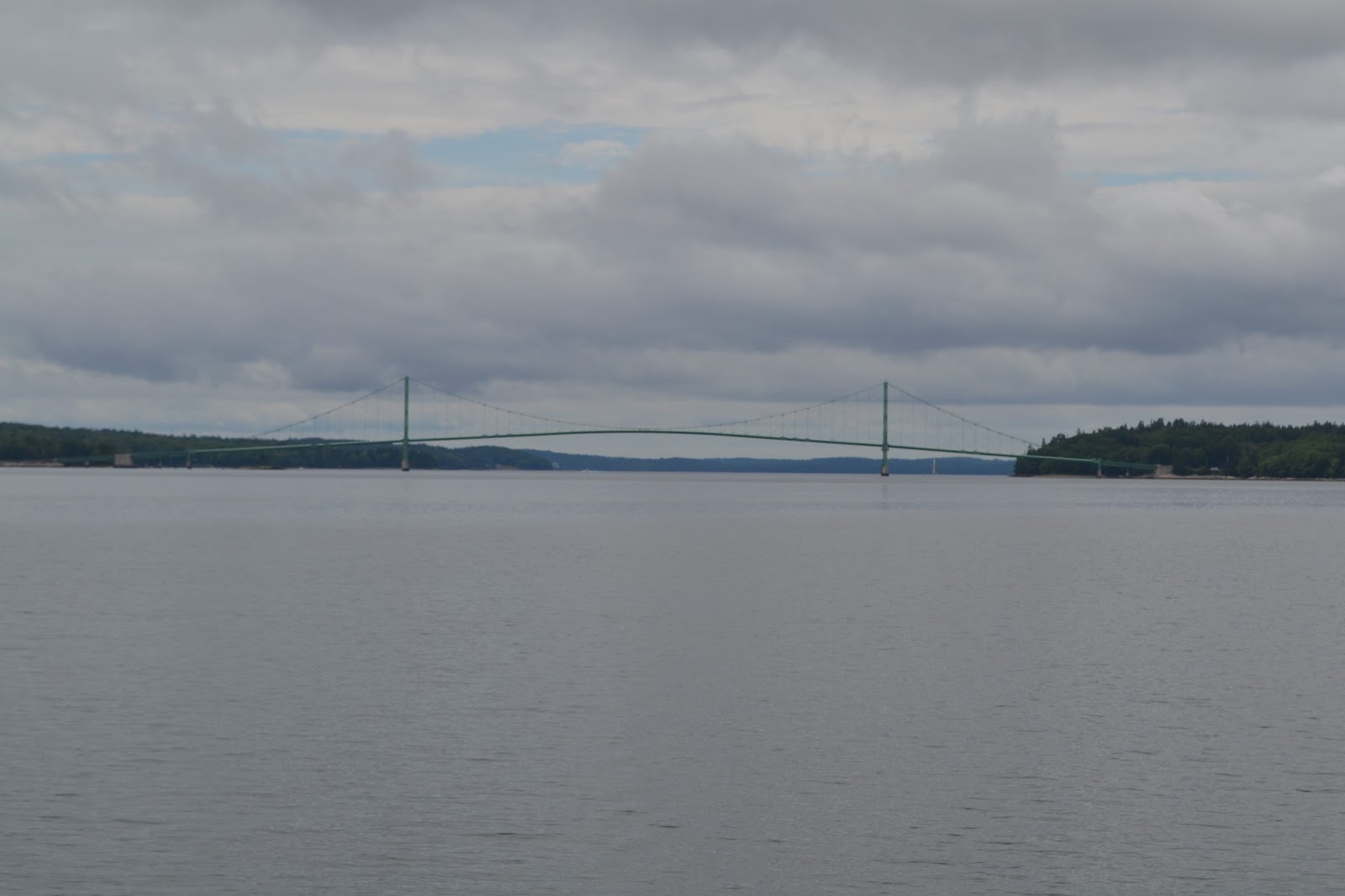
Center Harbor is located on Eggemoggin Reach. Likable because it has a cool name, very few lobster pots and is the first suspension bridge Tanqueray has gone under since the Throgs Neck bridge.

Kollegewidgwok

Blue Hill, Maine

looks green to me

Blue Hill is home to the Kollegewidgwok Yacht Club where we rented a mooring. When I first called them on the radio, I didn't even try to get the name right. Instead, I tried to slur something quickly that started with a 'k' and had a 'w' in there somewhere. I soon realized that no one has any idea how to pronounce the name and so everyone just calls it KYC.

Blue Hill Bay

Allen Cove, Blue Hill Bay

Blue Hill Bay is one of the nicest stretches of water we've sailed in Maine. One can see Blue Hill to the north, the Acadia mountains to the east and, best of all, there are few lobster pots cluttering the way.

We spent one night in Allen Cove, a quiet cove exposed only to the north.

Monday, August 28, 2017

Homecoming

Southwest Harbor, MDI, Maine

Our last destination on MDI, Southwest harbor is where our Morris Justine was born - 27 years ago at Morris Yachts. It's the first time she has been home since we've owned her. Morris was purchased by Hinkley Yachts a couple of years ago. I suspect it's no longer the family owned business it once was.

The Mountains of Acadia Park above Southwest Harbor

Thursday, August 24, 2017

fjards

Somes Harbor, MDI, Maine Somes Sound is the only fjard in the lower 48 states (or something like that). It was impressive to be sailing in such deep water nestled between the mountains of Acadia Park. Some day I hope to visit even more impressive fjords in Newfoundland and Quebec. Not sure why I didn't take a picture.

Tuesday, August 22, 2017

End of Easting

Northeast Harbor, Mount Desert Island, Maine

Leaving Swan's Island and heading northeast brought us to Northeast Harbor, Mount Desert Island, Maine. This is the farthest east Tanqueray will go this summer. There's not much between here and the Canadian boarder.

Admiral V

Northeast Harbor is home to the most expensive collection of boats I've seen since visiting Nantucket. The local population (including several billionaires) voted against allowing cruise ships to visit the harbor.

Monday, August 14, 2017

Swan's Island revisited

Swan's Island, Maine

On our way farther downeast we stopped at Swan's Island. My second visit there. After exchanging emails with Deb, she graciously offered to give us a tour of her home on Toothache Cove.

Toothache Cove

We had a throughly enjoyable time hearing about their life on Swan's Island and seeing their beautiful, custom built home. They have spectacular ocean views from every room in the house (Ed pointed out you have to leave the bathroom door open to make the statement completely true). We're determined to return here again and take Deb and Ed up on their offer to give us a tour of the island.

Deb and Ed's amazing home

It is both fun and scary to imagine life on an island without a supermarket or even a drug store.

We were moored in Burnt Coat Harbor which is dominated by Lobster boats. There were very few pleasure craft around. Every morning at dawn the (loud) lobster boats head out to sea. In early afternoon they return and pull up, one by one, to a little green shed at the co-op (or other dock). They pull their catch out of a holding tank and put them in plastic crates. The crates are then passed through the green shed where I presume they are weighed. Next, they are strung together and put back in the water where they stay until (often the next day) they are manually hoisted up by a small pulley and crane and put into trucks to be sent off island for sale.

Lobster pound
Tanqueray among the lobster boats